

At Blanes Pressure Solutions, temperature and pressure measurement are part of a wider industrial instrumentation offering that supports sectors where reliable readings are critical every day. The company supplies thermo gauges and related instruments for real plant conditions, while also offering SANAS-traceable calibration support for gauges and testers.
What Is Temperature Gauge Calibration?
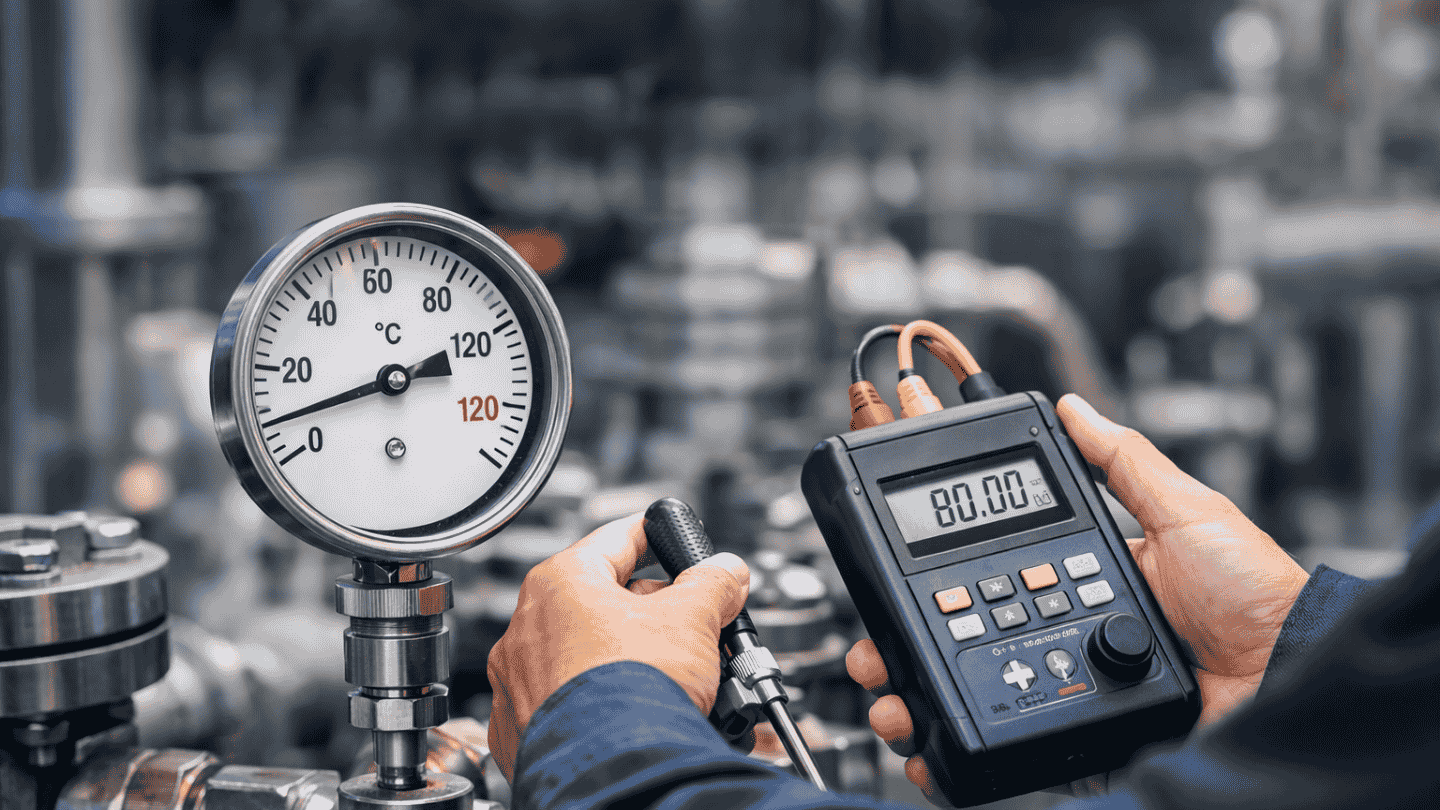
Temperature gauge calibration is the process of checking an instrument’s reading against a known reference standard and adjusting or verifying it to confirm accuracy. In practical terms, calibration tells you whether the temperature shown on the gauge can still be trusted. Over time, mechanical wear, vibration, harsh operating environments, shock, age, and process exposure can all affect instrument performance.
For industrial plants, this is not just about technical correctness. It is about protecting the performance of the full process. A gauge that reads too high or too low can lead operators to make the wrong decision, especially where heating, cooling, steam, chemical processing, storage, or product handling depends on accurate temperature control.
Why Calibration Matters for Industrial Performance
-
It Protects Process Accuracy
Many industrial systems rely on temperature to maintain stable output. If a gauge is inaccurate, operators may think a process is running within range when it is not. This can affect batch quality, equipment performance, and compliance requirements. A calibrated temperature gauge helps teams make decisions based on trustworthy readings instead of assumptions.
In process industries, even a small temperature variation can influence viscosity, pressure relationships, reaction timing, equipment loading, and product consistency. Accurate measurement reduces guesswork and improves control.
-
It Supports Plant Safety
Temperature is closely linked to risk in many industrial environments. Overheating, thermal stress, steam imbalance, and unstable process conditions can all create safety concerns. If a gauge is inaccurate, these warning signs may be missed or misunderstood. Calibration helps ensure temperature instruments reflect actual conditions, giving maintenance and operations teams a better chance to respond early. Blanes also positions accurate instrumentation as part of protecting plant, people, and profit.
-
It Reduces Unplanned Downtime
Bad readings often lead to bigger maintenance problems. Equipment may be pushed beyond ideal conditions without anyone realising it. Motors, pumps, heat exchangers, vessels, and process lines can all suffer when heat-related problems go unnoticed. Regular calibration helps identify drift before it turns into failure, shutdowns, or production delays.
This matters in industries where uptime is everything. A planned calibration schedule is far more affordable than emergency downtime caused by incorrect readings.
-
It Helps Protect Product Quality
In manufacturing and processing environments, temperature control often affects the final result directly. Products may need to be mixed, heated, stored, or transported within precise ranges. If the gauge reading is wrong, quality can become inconsistent. That may mean rejected batches, wasted raw materials, rework, or customer dissatisfaction.
Calibration improves confidence in the measuring point, which supports repeatable output and stronger quality control systems.
-
It Improves Energy Efficiency
When readings are inaccurate, systems are often over-corrected. Operators may overheat or overcool equipment trying to hit a target that is not actually correct. This wastes energy and increases operating costs. Calibrated instruments help plants run closer to optimum conditions, which can improve efficiency across the process.
In a high-cost industrial environment, better instrument accuracy can support better energy discipline over time.
Common Causes of Temperature Gauge Inaccuracy
Temperature gauges can drift for several reasons. Normal wear is one factor, but industrial environments add extra stress. Common causes include:
- Continuous vibration
- Mechanical shock during handling or operation
- High cycling conditions
- Exposure to corrosive or harsh media
- Ageing components
- Poor installation position
- Extreme ambient conditions
- Lack of scheduled maintenance
Blanes Pressure Solutions supplies instrumentation designed for industrial use where vibration, temperature swings, and harsh media are part of daily operating reality. That makes correct product selection just as important as calibration itself.
When Should a Temperature Gauge Be Calibrated?
Calibration frequency depends on the application, industry, risk level, and how critical the measuring point is. While some instruments may follow an annual schedule, others in demanding or regulated environments may need more frequent verification. Blanes’ SANAS-traceable calibration page notes that a calibration certificate is typically valid for one year, which gives a useful baseline for many operations.
You should also consider calibration sooner if:
- Readings appear inconsistent
- The instrument has been dropped or damaged
- The process has changed
- The gauge has been exposed to harsh service conditions
- You are troubleshooting unexplained temperature behaviour
- The plant is preparing for an audit or shutdown inspection
Why Traceability Matters
Not all calibration carries the same level of confidence. In industrial environments, traceability matters because it shows the measurement can be linked back through recognised standards. Blanes Pressure Solutions offers SANAS-traceable calibration services, with calibration equipment regularly certified by SANAS-accredited laboratories. That strengthens confidence in the results and supports businesses that need dependable records for quality systems, audits, and maintenance planning.
Choosing the Right Temperature Gauge Matters Too
Calibration is only part of the picture. The instrument itself must suit the application. Blanes Pressure Solutions offers a thermo gauge range that includes bi-metal thermometers, rigid stem and distant reading stainless steel thermometers, inert gas thermometers, and all-angle stainless steel thermometer models. These options help plants choose a gauge better suited to installation position, operating environment, and response requirements.
A correctly selected instrument is easier to trust, easier to maintain, and more likely to hold performance over time. When the wrong type of gauge is installed, even regular calibration cannot fully solve application mismatch.
5 FAQs
- Why is temperature gauge calibration important in industry?
It helps ensure accurate readings, which supports safety, product quality, energy efficiency, and stable process control. - How often should a temperature gauge be calibrated?
It depends on the application, but many industrial instruments follow an annual cycle, while critical applications may need more frequent checks. - What are the signs that a temperature gauge needs calibration?
Common signs include inconsistent readings, suspected drift, physical damage, harsh service exposure, or unexplained process temperature problems. This follows the same general warning logic Blanes highlights for gauges needing calibration. - What does SANAS-traceable calibration mean?
It means the calibration can be traced through documented comparisons back to recognised standards, giving stronger confidence in measurement accuracy. - Can calibration help reduce downtime?
Yes. Accurate gauges help detect process issues earlier and reduce the risk of equipment stress, poor control, and unplanned stoppages.
We also offer SANAS traceable calibrations complete with a certificate, valid for 1 year on our premises.
Blanes Pressure Solutions supplies a comprehensive range of pressure measurement instruments.
Blanes Pressure Solutions was founded in 2002 to take over the pressure business of Blanes Instruments CC, and can trace its pedigree back to 1893, when Robert Blane left Scotland to make his fortune on the Witwatersrand.
For more information on placing orders, after care and maintenance services you can contact our Sales Manager Ronel Olivier on ronel@pressuresolutions.co.za or 011 422 1749.


